Showing posts with label BBA Challenge. Show all posts

Tuesday, March 1, 2011

BBA Challenge Bread #43—Roasted Onion & Asiago Miche

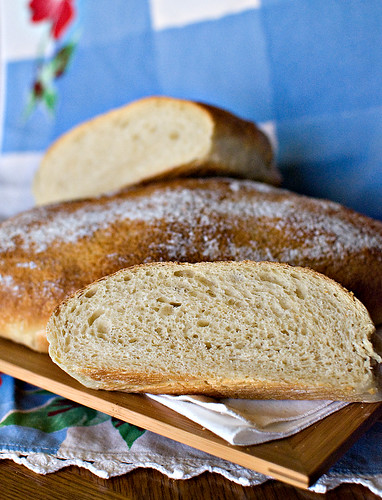
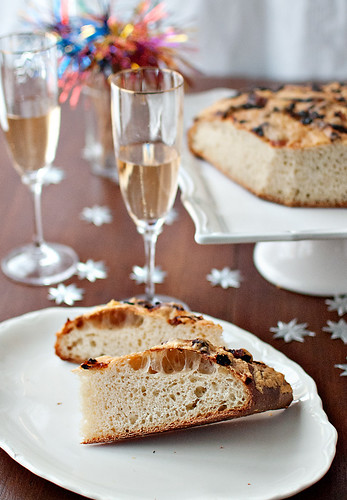
BBA43-crumb-celebrate2

Pop the champagne. I did it. I baked EVERY bread in The Bread Baker's Apprentice. Sure, it took almost a year longer than I thought it would but here I am.

Roasted Onion and Asiago Miche
Otherwise known as The Final Bread. This bread was a spectacular end to a 22-month long journey of awesomeness.


I'm officially done baking my way through Peter Reinhart's award winning book, The Bread Baker's Apprentice, along with a number of other amateur bakers. (I'm not sure how many are still with us. Many have finished - and some are just starting). Want to learn more about it? Check out the following links:

Technically, I finished with the challenge about 4 weeks ago, but am now getting around to writing it up. I'll probably write a final-final post about the challenge, so for now, let's just talk about this lovely beast:
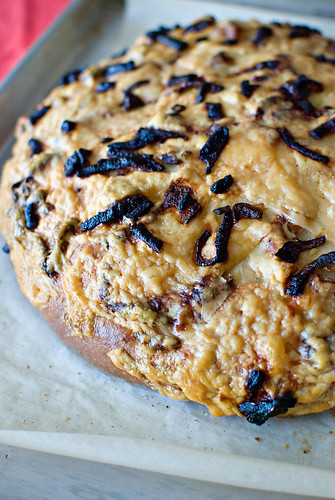
bakes-vert

Roasted Onion and Asiago Miche. Let me tell you, the is one of the best smelling - and tasting - formulas in the book. AH-mazing. But I'm getting ahead of myself. I'll begin at the beginning.

As with the Potato, Cheddar & Chive Torpedoes, this formula is meant to be a mixed method of wild and commercial yeast, and like the PCCT, I opted to use a poolish in place of the wild yeast starter seeing as I no longer have one. I mixed that up 2 days before I wanted to bake the bread (this is a 3-day job).

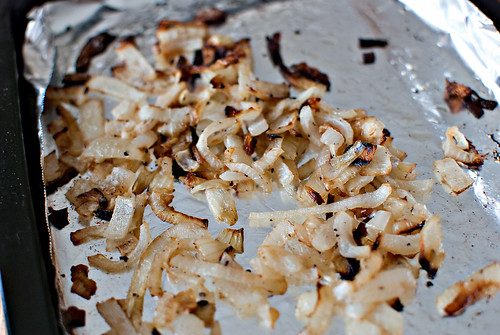
The next day was most of the heavy lifting. I roasted the onions (a little TOO much)...
BBA43-onions

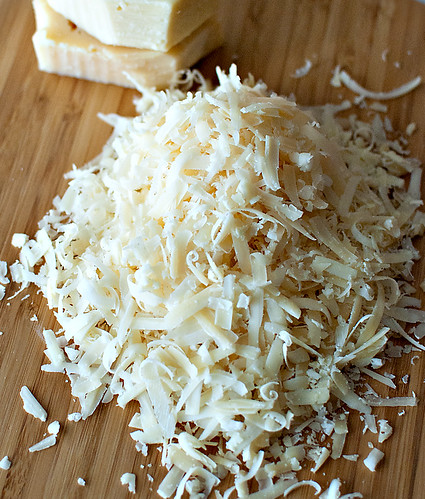
Shredded a pile of cheese (oh, yeah)...
BBA43-grated cheese-OH

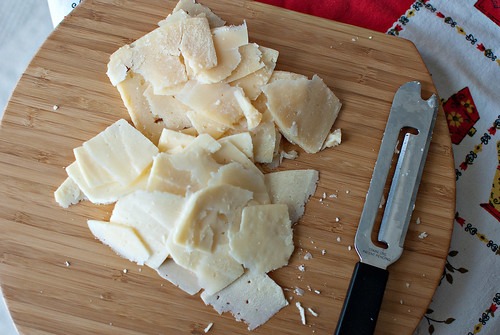
Shaved a pile of cheese (oooooh, yeaaahh)...
BBA43-shaved cheese

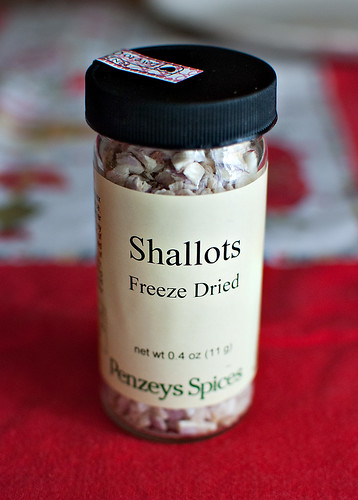
And got to mixin'. This bread calls for scallions but I completely spaced that and decided to use my Penzeys dried shallots instead.
freeze dried shallots

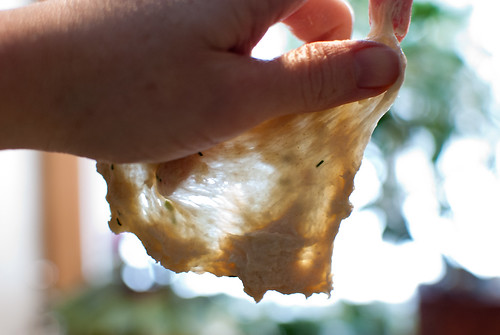
I mixed the poolish, flour, yeast, water, a bit of olive oil, that big ole pile of shredded cheese, along with the shallots and dried chives. I attempted to take a picture of the windowpane - which I really almost kind of achieved - but it's tough with just one hand.
BBA43-windowpane

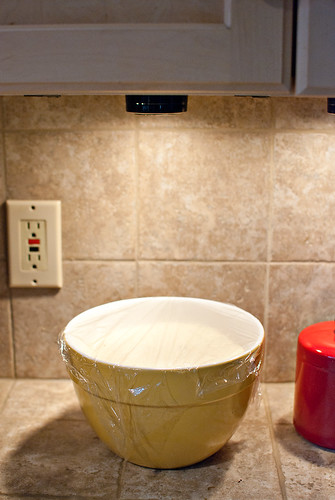
After it was all mixed and at the right consistency I let it ferment about 2-3 hours. I have a new favorite place to proof my dough. I usually nuke a mug of water in the microwave until very hot then pop the dough in with the steaming mug, but Dwight installed these under the counter lights and they get... toasty. I just slide the bowl right under one of the lights and it warms it up nicely. 
new proofing method

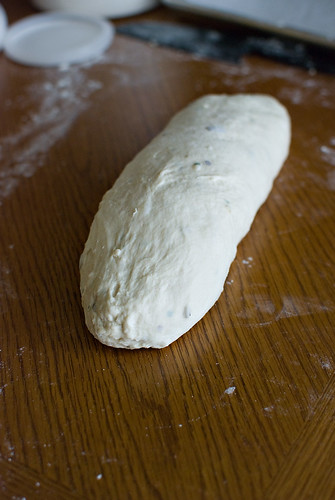
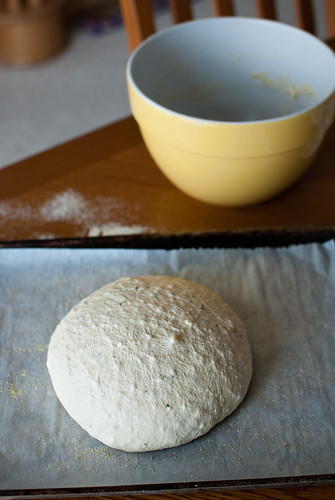
After fermenting, it gets shaped, covered and goes in the fridge overnight to let the flavors develop even more.
BBA43-shaped

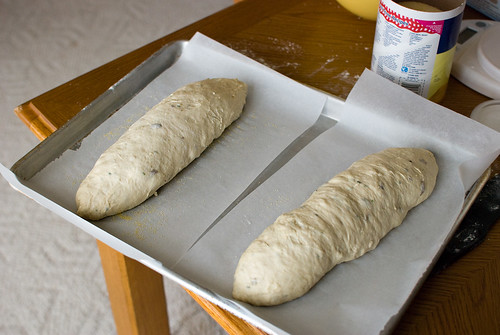
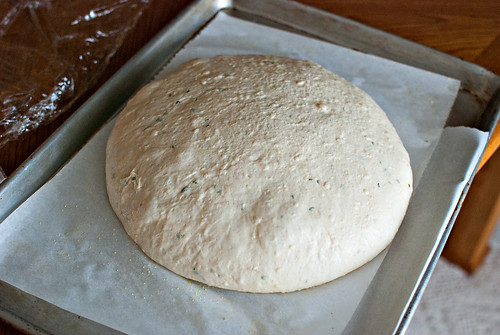
After I pulled the pan out of the fridge the next day, I realized the the original pan I had the bread on was going to be too small, so I moved it to my half sheet pan and let it sit at room temperature about 2 hours.
BBA43-proofed

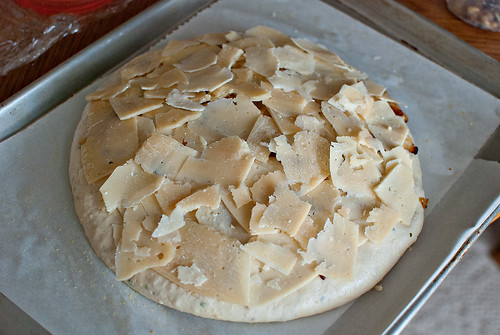
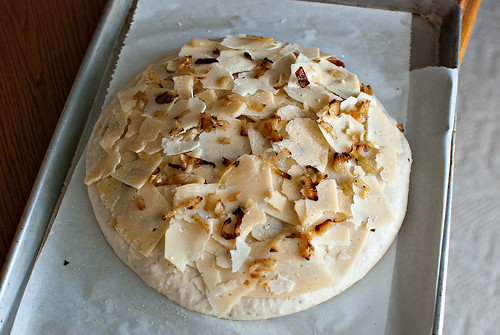
Then you're supposed to brush the top with olive oil (missed that step) dimple the dough, sprinkle on the cheese then the onions and let it rest about 20 minutes. But I didn't quite do that. I'd seen some of the other bakers' breads and noticed that the onions were, shall we say, well done. So I hedged my bets and put half of the onions under the cheese and half on top. And as you saw, I decided to shave the cheese instead of shred. Don't know why - just felt like it, I suppose.
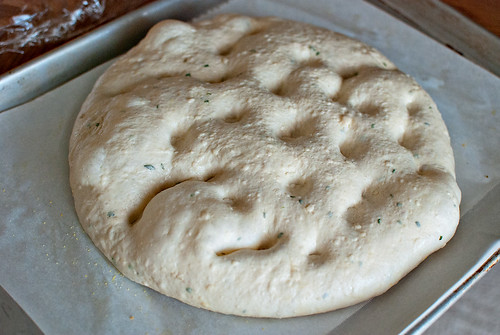
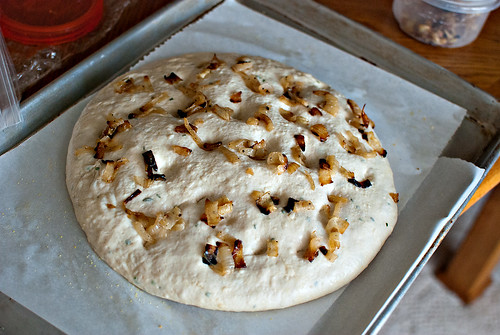
BBA43-dimpled

BBA43-onionlayer1

BBA43-cheeselayer

BBA43-onionlayer2

And I forgot to let it rest. I just popped it into the oven after topping. Oops. *note to self: read ALL instructions*

I hearth-baked the bread as required and let me just tell you how amazing my house smelled right then. Asiago and parmesan (I used half and half) permeated the air. It was intoxicating. 
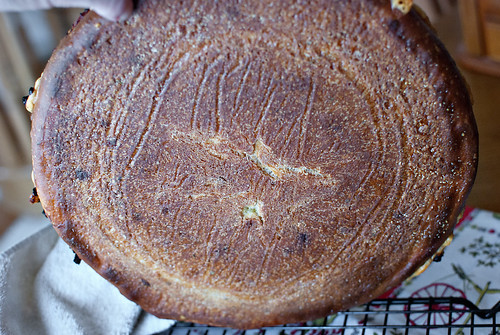
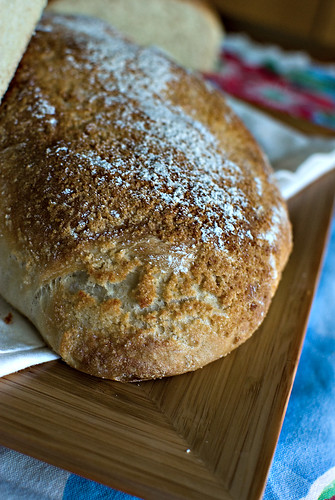
BBA43-bottom

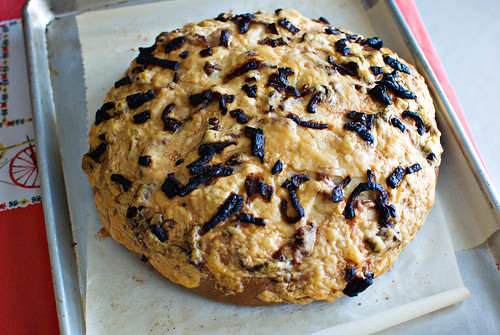
baked

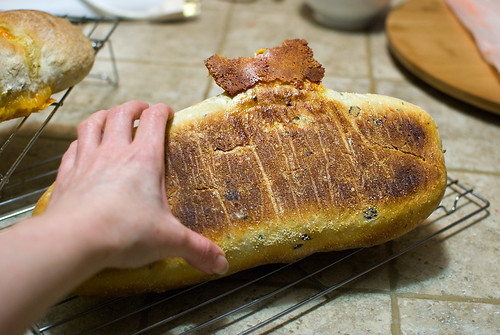
Alas, the onions did burn. Charcoal bits of yuck on the top. It's the only flaw I can see in the formula, and in my opinion, a pretty big one. Either the onions should go on raw and roast as the bread bakes, or they need to stay safely nestled under a big pile of cheese. 

I just pulled off the charred bits and dove right in. Oh, so good. I should note that due to the size of the original formula, I chose to halve it as Dwight and I were getting ready to try a new diet literally the next day. A "no bread" diet. I know, the horror. So I wrapped up the bread nice and tight and put it in the feezer to enjoy at a later date. Fortunately the diet allowed us to have one "cheat" day a week, so I broke out the bread each weekend. 

We had friends over one evening and I turned it into cheesy garlic bread to go with lasagna.  Holy WOW, this makes the best garlic bread. And, I can tell you from experience, that this bread freezes nicely. It was drier, but still delicious and is worth popping in the toaster for a warm up and light toasting before eating. Excellent!

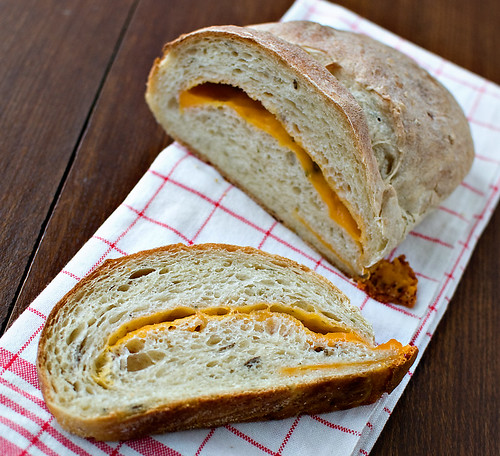
So there you have it. The very last bread. Hard to believe, isn't it?! Thank you to all that have followed along the way. Here, have a big slice of bread...
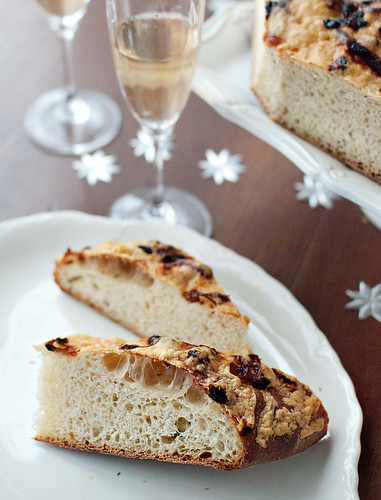
BBA43-crumb-celebrate

Sunday, January 30, 2011

BBA Challenge Bread #42—Potato, Cheddar & Chive Torpedoes

PCC-crumb2


Oh, that sly Mr. Reinhart. He saved some humdingers for the final two breads in The Bread Baker's Apprentice – "the final grace notes" recipes. We've made it to the second to last – Potato, Cheddar, and Chive Torpedos – and they're wonderful. Let's take a look.


I'm baking my way through Peter Reinhart's award winning book, The Bread Baker's Apprentice, along with a number of other amateur bakers. (I'm not sure how many are still with us. Many have finished - and some are just starting). Want to learn more about it? Check out the following links:

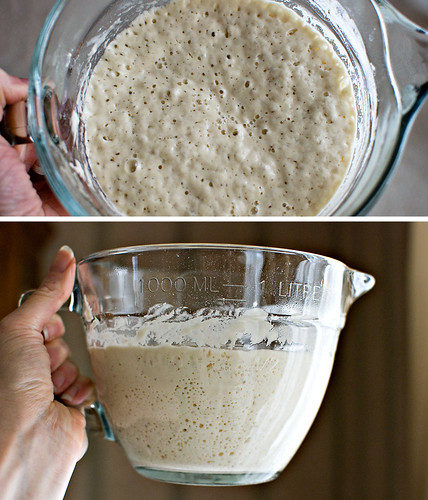
Technically, this bread is meant to be a mixed-method formula, meaning it combines a wild yeast starter with commercial yeast. As I mentioned in my BBA bread #35, I managed to lose my starter and I never bothered to make another. I kinda sorta thought about giving it another whirl, but never got around to it. So when it came time for this bread, I diverged from the formula as written and replaced the barm (or starter) with poolish, a standard preferment we've used at various points throughout the book. 

PCC-poolish collage

I made a half batch of the poolish formula in the book which would yield a bit more than I needed, but I wasn't concerned about that. I mixed it up on a Friday evening and let it sit out until I used it the next day. I didn't bother to refrigerate it, so all told, it was bubbling away for about 18 hours.

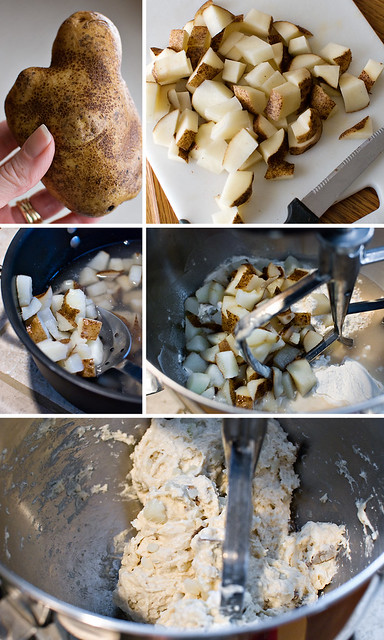
Before I put the preferment to use, I cooked up the potato, let it cool, then added it and about 3/4 cup of potato water to some flour, yeast and salt. 

PPC-potato collage

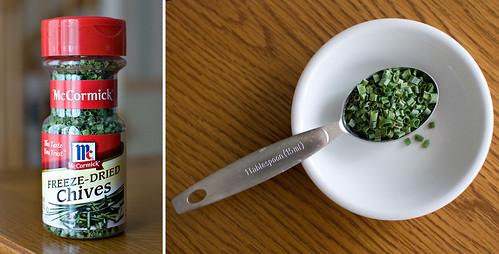
This recipe calls for fresh chives which is the one herb I actually DO successfully grow, but mine was under a foot of snow. Gah. If I'd picked up the pace last year, I could have used some, but alas, it didn't happen. Instead, I used this.
chives collage

I would have picked up some "fresh" chives at the store, but they were ridiculously expensive for what you got, so I made peace with it, and bought the dried. The recipe called for 1/4 cup of fresh, so I guestimated on how much to use of the dried and went with one tablespoon.

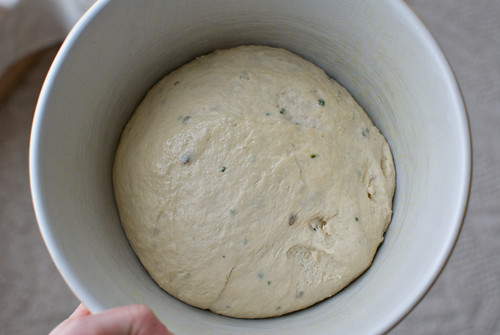
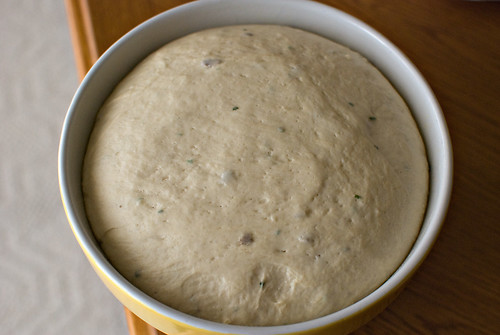
Chives were incorporated, dough was kneaded and placed in an oiled bowl, ready to ferment to double in size. It did me proud.

PCC-pre
PCC-post

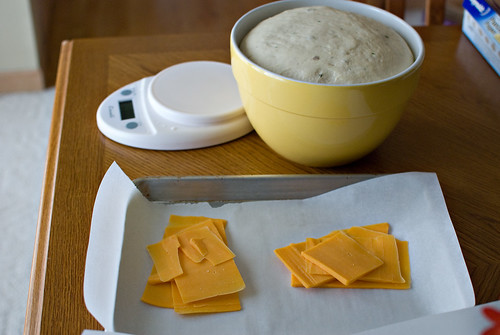
The it was time to shape. I had my sharp cheddar sliced, weighed and ready to go.
PCC-prep for shaping

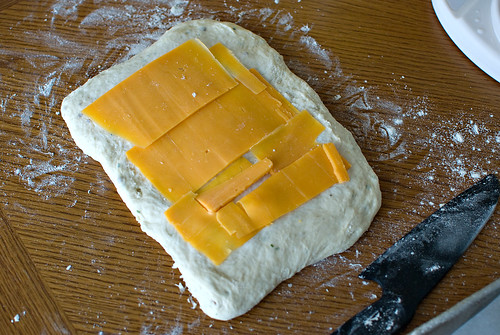
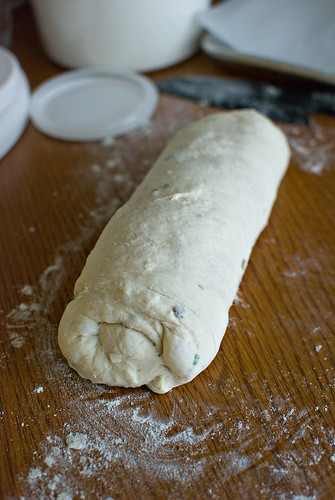
I divided the dough, patted into a small rectangle, layered on the cheese and rolled into a log. Then you push down and roll the ends into slight tapers to give it the torpedo shape.

PCC-cheese layer
PCC-rolled
PCC-tapered

I put the two shaped loaves on the parchment lined, cornmeal dusted sheet and let them proof about 90 minutes.

PCC-2 shaped

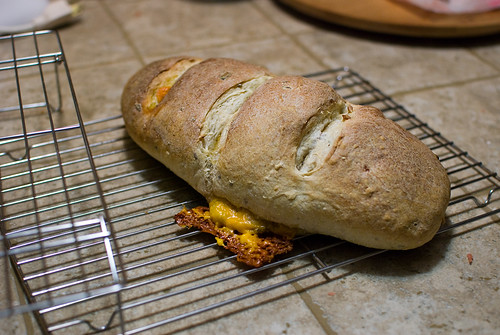
By the time the loaves finished baking, it was dark so the next photos aren't the greatest, but you get the idea. Unfortunately, I didn't roll these tightly enough and they both oozed cheese out the side at the bottom. The cheese is *supposed* to ooze out of the slashes at the top, but I didn't have much luck with that.
PCC-cheese ooze
PCC-bottom

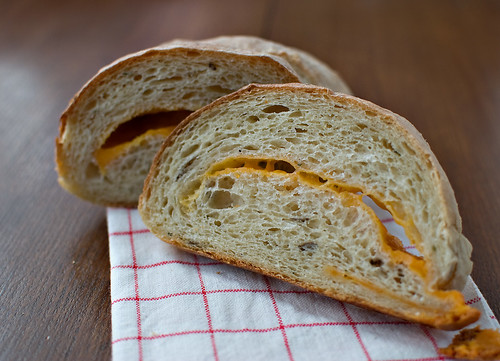
Appearances didn't matter, though, because the bread was delicious. I kept coming back for slice after slice until I realized that I was way too full to eat any more. 

PCC-crumb

There are only three things I'd change. 
1) I'd add more dried chives, probably double the amount.
2) I'd divide the dough in thirds so that I could pat it out thinner and add more cheese (more cheese is always good)
3) I'd roll it nice and tight and keep the seem side up just to be safe. 

These are all minor, nit picky kinds of things. Overall it was fantastic and in my top 10. OOH! I just thought of something. You know what would be amazing?! Combine bread #28, potato rosemary bread with roasted garlic with this. *heaven*

Friday, January 21, 2011

BBA Challenge Bread #41—Whole-Wheat Bread

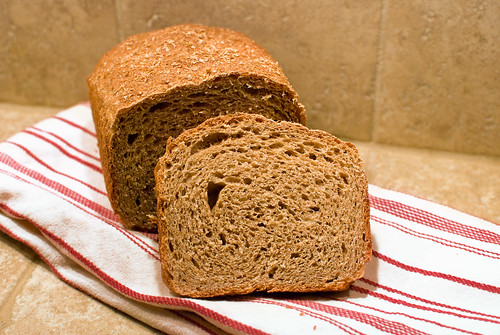
WW-crumb
(probably my worst crumb shot ever - most humble apologies)

Hey, it's January. New Year's resolutions are still fresh in our minds, many of us are vowing to eat better, so if you haven't given up carbs entirely, whole wheat bread is your ticket, right? So long as it tastes good! Let's find out if this formula fits the bill.


I'm ALMOST DONE baking my way through Peter Reinhart's award winning book, The Bread Baker's Apprentice, along with a number of other amateur bakers (I'm not sure how many are still with us. Many have finished - and some are just starting). Want to learn more about it? Check out the following links:

I haven't always been a fan of whole grain bread, and let's be honest, who can blame me. There are some seriously terrible "whole grain" breads lining the shelves of grocery stores everywhere. Dry, tough, full of mystery sticks and twigs as well as a whole host of artificial ingredients and/or fillers. Blech. As a kid I have to admit that I liked the generic, really bad for you white bread – not Wonder bread, we bought off brands or the store brand. My mom would buy the wheat bread and we grudgingly ate our whole wheat PB & J sandwiches for lunch. 

But good wheat bread – REAL wheat bread, not a stripped-down version of it – can be exceptional, and I've had my share of out-of-this-world whole grain breads. So I was hopeful yet cautions about Peter Reinhart's whole wheat formula. I've made some bricks during this challenge and hoped against hope that this wouldn't be another.

This bread begins with two separate pre-fermets, a poolish and a soaker. The poolish is a combination of high protein whole wheat flour, yeast and water. The soaker is a just coarse grains and water. I chose to use coarse ground rye, of my own "grinding." 

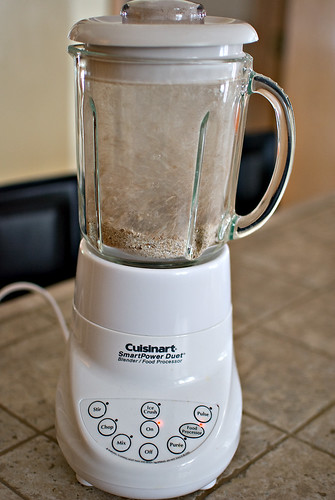
I still had (and have) plenty or rye flakes left over from my pumpernickel rye bread so I decided to grind some up for the soaker. I used my blender as it works WAY better than my food process for this.

WW_blender

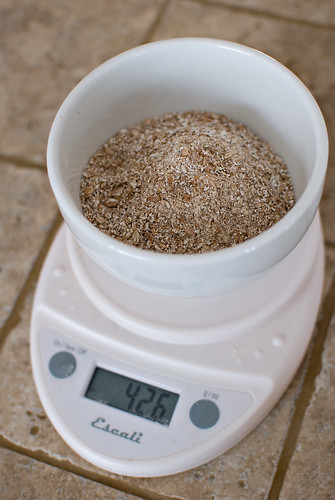
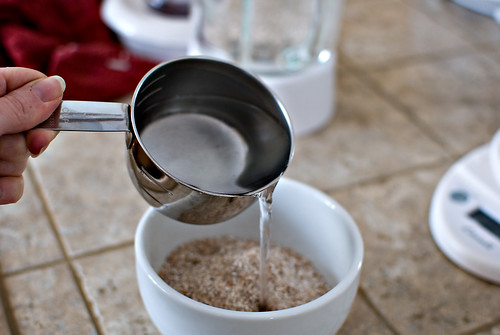
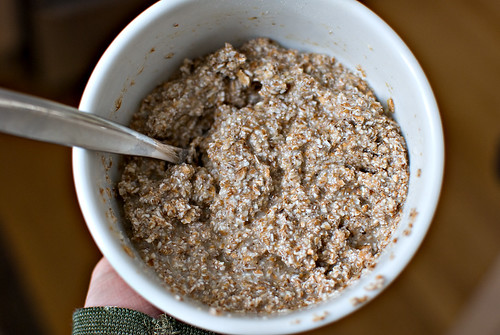
I weighed it (and manage to grind just about the right amount), added the 3/4 cup of water and gave it a good stirring.

WW-GrndRye
WW-pouring
WW-soaker

It soaked the water right up. That got covered and was left out all night for use the next day.

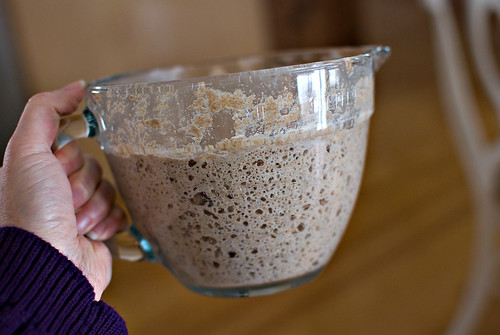
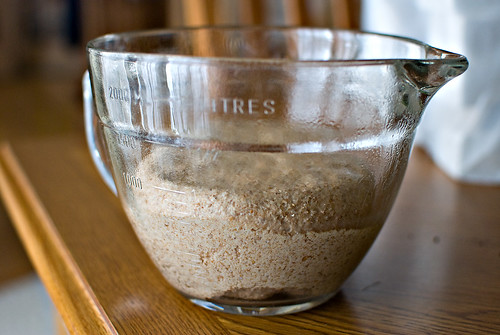
The other pre-ferment, the poolish, is meant to be thick, but more like a paste. It's mixed then covered and left to ferment for 2 to 4 hours or until it starts to bubble. After I added the amount of water called for in the recipe, I quickly decided that this was N E V E R going to "bubble" – it was far too thick.

WW-poolish-dry

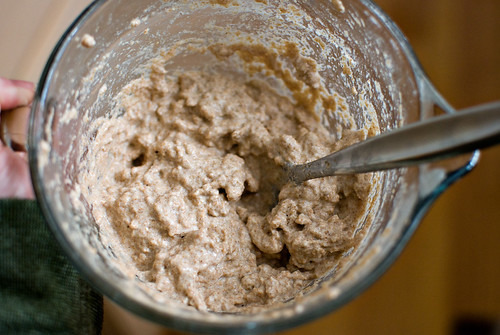
It was all I could do to get all of the flour hydrated. So I made an executive decision based on the knowledge I'd gained from this challenge (yay, knowledge!) and added enough water to make it paste-like. Much better.

WW-poolish-wet

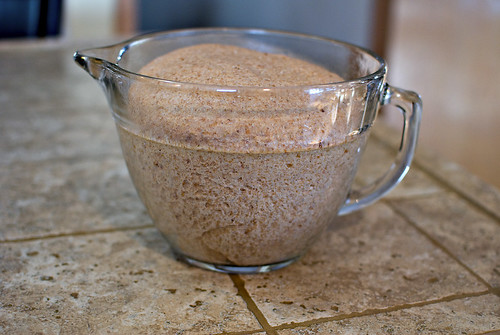
I let it do it's thang and it rewarded me with this:
WW-poolish-ferment
Lots of lovely bubbles, telling me that this poolish was a winner!

I popped it in the fridge and went to bed, ready to put it all together the next day.

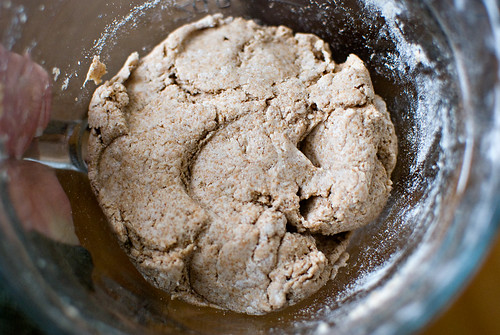
To the soaker and poolish were added more flour, yeast and water along with salt, a bit of honey and an egg, both of which were optional, but I knew the honey would enhance the flavor and the egg would help the texture. After some time in the mixer and on the counter, I put the kneaded dough in a bowl and let it ferment about 2 hours.

WW-kneaded

WW-1strise

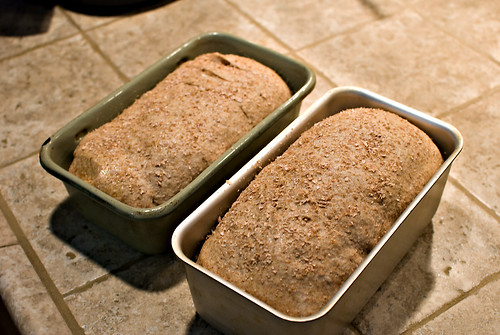
I divided it, shaped it, and popped it into two loaf pans and let those rise about 90 minutes. I spritzed them with water and sprinkled some wheat bran over the top for a bit of texture and visual appeal.

WW_proofed

The loaves got zero oven spring, but were NOT bricks. HOORAY! In fact, the texture was excellent. Somewhat open, a bit soft and pleasantly chewy. But the taste... well, I'm sorry to say that it was lack luster. It benefitted from toasting and a smear of peanut butter, but was bland and boring on it's own. Bummer. I ate one loaf but decided to put the rest in the freezer for now, hanging out until I put it to another use. I think it will make excellent bread crumbs, so certainly not a bad thing. 

If (and that's a pretty big "if") I decide to make it again, I'll add more honey and possibly some butter to help with the flavor. Chances are, though, I'll break out one of my other bread books and see what their whole wheat tastes like. Whole grain breads can be tricky, no question. Remember the 100% sourdough rye?
SDR-brick
 *ouch* That was tragic. 


Sunday, December 26, 2010

BBA Challenge Bread #39—Vienna Bread


vienna-crumb

BBA Bread #39—Vienna Bread, another rustic bread similar to French or Italian, but with some enrichments.

I'm ONLY THREE BREADS AWAY from baking my way through Peter Reinhart's award winning book, The Bread Baker's Apprentice, along with a number of other amateur bakers (I'm not sure how many are still with us, and a number of us have finished). Want to learn more about it? Check out the following links:
So the only thing I remember about this bread is that it gets the "Dutch crunch" topping. That's probably a bad sign, don't you think? I don't recall NOT liking it (how's that for a double negative) but it must have been pretty non-descript for me to remember almost nothing about it. 

It's an old-fashioned rustic bread, like some others we've done, but this is enriched with an egg, a tiny bit of sugar and butter and a bit of diastatic malt powder to help with color. Italian bread was the other rustic bread to use malt powder.

Vienna-Crunch

The Vienna bread also introduces a new technique for bread topping called "Dutch crunch" which involves rice flour, regular flour, yeast, sugar, salt, oil and water. You make a paste then spread it on top of the shaped bread before proofing. It was an interesting procedure and technique, but a bit anti climatic for me. 

The verdict: A good if forgettable loaf. 

Sunday, December 12, 2010

BBA Challenge Bread #38—Tuscan Bread

tuscan-crumb1

BBA Bread #38—Tuscan Bread. It's claim to fame? It's salt free. Does that equal "taste-free"? Let's find out...

I'm "oh-my-gosh-so-close-yet-so-far" baking my way through Peter Reinhart's award winning book, The Bread Baker's Apprentice, along with a number of other amateur bakers (I'm not sure how many are still with us, and a number of us have finished). Want to learn more about it? Check out the following links:
I know, I know. I'm dragging my heels with this challenge, no question. Blogging about hasn't exactly been stellar, either. I made those lovely loaves you see up there nearly three months ago. 

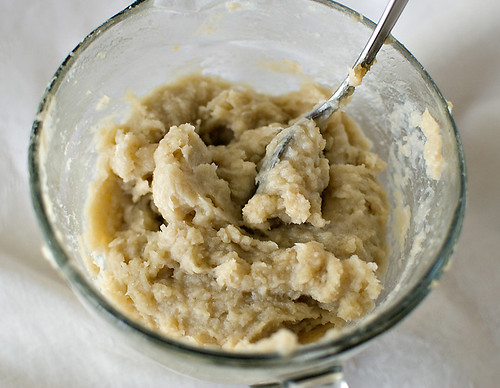
As I mentioned in the intro, this bread is salt-free, an anomaly in the bread world as salt adds considerable flavor to bread. But Tuscan bread ekes out flavor in another way – by using a flour and water paste prepared the day before final mixing and baking. Boiling hot water gelatinizes the starches in the flour, "releas(ing) flavors that give(s) this bread a distinct quality, quite unlike any other bread." 

tuscan-paste1
tuscan-paste2

To the paste is added the usual suspects: bread flour, yeast, water and in this case, olive oil. Mix, knead, proof, shape, rise... and bake.

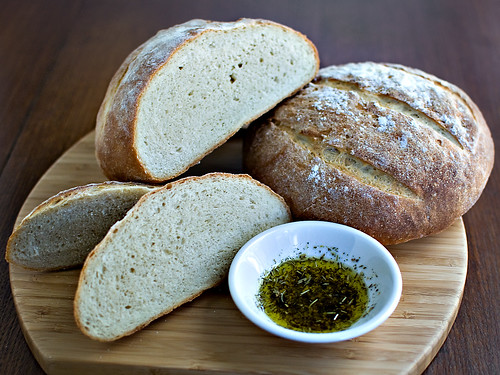
tuscan-baked

They certainly look lovely, but how do they taste? I thought they tasted darn good. Sure, a bit bland on its own, but I really liked it warm, dipped in olive oil and spices as shown in the first photo, and lightly toasted with a bit of butter.  I'm not sure I'd make it again given the other outstanding alternatives in this book, but it was certainly worth trying.

See what other BBA bakers had to say:

Janice at Round the Table

Sunday, October 3, 2010

BBA Challenge Bread #40—White Bread

white bread crumb

Another out-of-sequence bread from the challenge. I skipped to this one because I had limited about of time to bake and wanted to take advantage of it. This bread is completed in just one day, so it fit the bill. Easy, delicious and versatile — BBA White Bread (Variation 2).


I'm ALMOST DONE baking my way through Peter Reinhart's award winning book, The Bread Baker's Apprentice, along with a number of other amateur bakers (I'm not sure how many are still with us, and a number of us have finished). Want to learn more about it? Check out the following links:
The Bread Baker's Apprentice offers three variations on white bread, playing with a few ingredients and methods. Breads 1 and 2 are almost identical with the exception of milk. #1 used powdered and #2 uses buttermilk. Variation 3 uses a sponge method – mixing the flour, yeast and whole milk and letting that sit for 45 minutes before moving on to the rest of the process. 

One of my oft-made pre-challenge bread recipes was for a buttermilk bread, so I opted for Variation 2. Not that I have the others to compare with, but I think I made the right choice.

Here's the ingredient round up. Bread flour, buttermilk powder (love this stuff!), salt, butter, yeast, egg, sugar and water.

whitebread-ingredients

Mix all that up, knead, pop it in a greased bowl and let it ferment 1-1/2 to 2 hours or until doubled.

whitebread-mixed

whitebread-ferment

Shape it into a boule...

whitebread-shaped

And let it double in size.

whitebread-proofedinDO

I decided to leave all 36.44 ounces of this dough as one giant boule. I just bought a crazy cheap Dutch oven and wanted to put it to use.

dutch oven

The good folks at America's Test Kitchen tweeted about their Dutch oven test and a surprising recommendation was revealed. It turns out WalMart had one for about $40 and it fared well in their tests. I immediately went on line and snatched one up. I didn't want to risk not finding one at my local store, so I shipped one right to my door. It did a bang up job!

whitebread-baked

I thought this bread was very tasty. Soft, tender and entirely too easy to just eat and eat. It's definitely worth repeating.

Check out some other BBA baker's white bread variations:

Related Posts Plugin for WordPress, Blogger...